
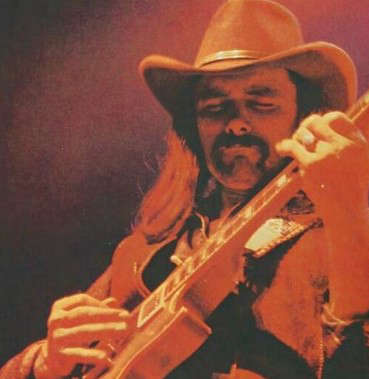
How a Florida kid with a knack for melody helped build the Allman Brothers Band and carried its legacy through triumph and tragedy.
Dickey Betts was born Forrest Richard Betts on December 12, 1943, in West Palm Beach, Florida, and raised on a mix of bluegrass, Western swing, and country standards. Those influences shaped one of the most distinctive guitar voices in American music. But his path from small-town stages to Southern rock legend came with soaring highs, hit songs that reshaped rock radio, and a series of heartbreaking losses that forever altered the band he helped define.
Betts cut his teeth in local Florida bands before fate, timing, and shared musical instincts brought him into the orbit of Duane Allman. In 1969, Betts, Duane, Gregg Allman, Berry Oakley, Jaimoe, and Butch Trucks formed the Allman Brothers Band—a group that blended blues, rock, jazz, and country with a freedom that made each live show feel like a new conversation. Betts’ clean, melodic style immediately paired with Duane Allman’s fiery slide guitar to create one of rock’s great twin-guitar sounds.
Though Duane was often seen as the band’s spiritual leader, Betts was quietly carving out his own space as a songwriter. His instrumental “In Memory of Elizabeth Reed” became a centerpiece of their 1970 album Idlewild South, showcasing Betts’ jazz influences and the band’s improvisational power. It would become one of their most celebrated live tracks, especially on At Fillmore East—the album that established the Allmans as one of America’s premier live acts.
But just as the band began ascending, tragedy struck. Duane Allman was killed in a motorcycle accident in October 1971. Betts stepped into the role of primary guitarist, a position he never sought but carried with grace. Barely a year later, in 1972, bassist Berry Oakley died in a collision eerily close to the site of Duane’s crash. Those losses shook the band’s foundation, but Betts emerged as a stabilizing creative force.
In 1973, he wrote “Ramblin’ Man,” a song that would become the Allman Brothers Band’s first—and only—Top 5 hit. Its warm, country-rock feel marked a slight shift in the band’s sound and introduced Betts’ distinct vocal style to mainstream audiences. The track became a massive radio staple and helped propel the album Brothers and Sisters to iconic status, alongside Betts’ soaring composition “Jessica,” another future classic and one of the most recognizable guitar instrumentals in rock history.
Even with continued success, the Allmans were not spared further turmoil. Substance abuse issues, internal friction, and legal troubles led to multiple breakups and reunions. Through it all, Betts remained one of the band’s central creative pillars—until tensions reached a breaking point in 2000, when the Allman Brothers dismissed him from the group he co-founded.
Betts responded the only way he knew how—by forming and touring with his own bands: Great Southern, the Dickey Betts Band, and later the Dickey Betts & Great Southern lineup that featured his son, Duane Betts. These projects allowed him to reclaim his songwriting legacy, with shows built around his classics—“Blue Sky,” “Jessica,” “Ramblin’ Man,” “Southbound,” and more—while continuing to write and perform new material that leaned into his country and Western influences.
Though health issues would eventually slow him down, Betts’ impact remained undeniable. His songs became standards, his melodic sensibility helped shape Southern rock, and his guitar tone—bright, lyrical, unmistakably his—continues to guide generations of players.
The story of Dickey Betts is inseparable from the triumphs and tragedies of the Allman Brothers Band. But it’s also the story of a musician who refused to fade, choosing instead to carry the torch of the sound he helped create long after others were gone. His work stands as a testament to resilience, creativity, and the enduring power of a great melody played just right.
Sources:
- One Way Out: The Inside History of the Allman Brothers Band by Alan Paul
- Allman Brothers Band
Rolling Stone - Guitar Player
- Relix
- Rock & Roll Hall of Fame archives
Image: Public Domain
 The Ultimate "Digital Rug-Pull": A Soundtrack for the Strategically Pranked
 Flea Steps Out of the Funk Shadow with Jazz-Infused Solo Debut, "Honora"
 New Music Monday: Five tracks to warm up your week
 Willie Nelson’s Outlaw Tour Enters Second Decade
 Black Crowes Soar Again with A Pound of Feathers










Comments
Add a comment