


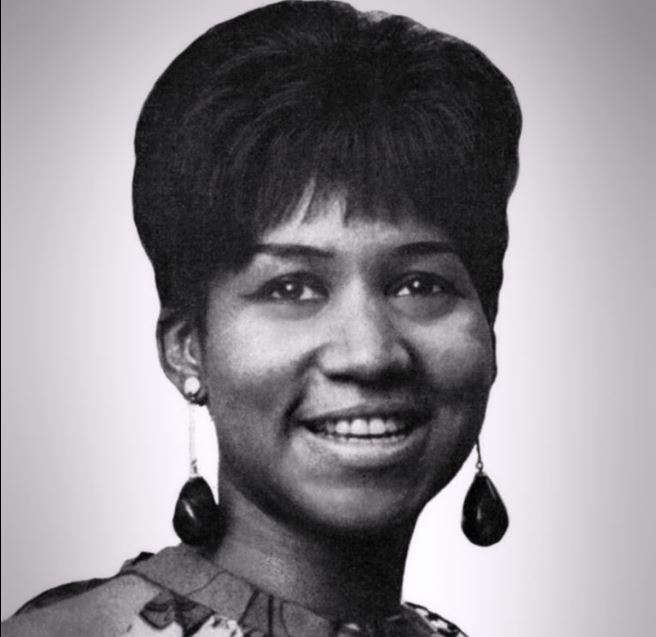
On January 3, 1987, the "Queen of Soul" shattered music’s glass ceiling, cementing her legacy as a trailblazer for every female artist who followed.
On the evening of January 3, 1987, the Grand Ballroom of the Waldorf-Astoria Hotel in New York City was filled with the architects of modern music. It was the second annual induction ceremony for the Rock and Roll Hall of Fame. The previous year, the inaugural class had been a "boys' club," featuring legends like Elvis Presley, Chuck Berry, and Little Richard. But on this night, the glass ceiling of rock and roll was finally shattered.
Aretha Franklin was officially inducted into the Hall of Fame, making her the first woman in history to receive the honor.
By 1987, Aretha had already been the "Queen of Soul" for two decades. Her journey to that podium began far from the glitz of Manhattan, in the choir loft of the New Bethel Baptist Church in Detroit. The daughter of the famous minister C.L. Franklin, Aretha was a child prodigy. She didn't just sing gospel; she possessed it. By her teens, she was a traveling star on the gospel circuit, possessing a voice that sounded far older and more experienced than her years.
However, superstardom didn't happen overnight. Her early years in the secular music industry were spent at Columbia Records, where she sang jazz standards and pop tunes that often felt too polite for her power. It wasn't until she signed with Atlantic Records in 1967 and went to a small studio in Muscle Shoals, Alabama, that the world finally heard the real Aretha.
That year, she released "Respect." The song was originally written and performed by Otis Redding, but Aretha completely reimagined it. By adding the iconic "R-E-S-P-E-C-T" chant and the backup vocals of her sisters, she turned a plea for a man’s domestic peace into a global anthem for civil rights and women’s empowerment. It became her first number-one hit and established her as a cultural force.
The statistics she racked up over the following decades were staggering. At the time of her induction, Aretha had placed 100 songs on the R&B charts. She had 73 entries on the Billboard Hot 100 and 17 Top Ten hits. Songs like "(You Make Me Feel Like) A Natural Woman" and "Chain of Fools" weren't just radio hits; they were the soundtrack to a changing America. She wasn't just a singer; she was a brilliant pianist and an arranger who knew exactly how to blend the sacred fire of the church with the grit of rhythm and blues.
On that January night in 1987, the Hall of Fame acknowledged that rock and roll was incomplete without the female voice. Aretha was inducted alongside a heavy-hitting class of peers, including the soulful Marvin Gaye, the rockabilly pioneer Roy Orbison, the blues master Muddy Waters, and the "Originator" himself, Bo Diddley.
Keith Richards of the Rolling Stones gave the induction speech, noting that the "Queen" had been a part of his life for as long as he could remember. Interestingly, Aretha herself was not present at the ceremony that night; her brother Cecil and record executive Clive Davis accepted the award on her behalf. Her absence did nothing to dim the significance of the moment.
Her induction opened the door for every woman who followed—from Tina Turner and Etta James to the pop and R&B icons of today. It was a formal recognition of a truth that music fans had known for years: that soul music was the backbone of rock, and Aretha Franklin was its ultimate authority.
When we look back at January 3, 1987, we see more than just a date on a calendar. We see the moment the history books were corrected. Aretha Franklin didn't just join the Hall of Fame; she defined the standard for everyone else in it.
Sources:
- Rock & Roll Hall of Fame
- Billboard
- The New York Times
- Respect: The Life of Aretha Franklin by David Ritz
- Atlantic Records
Image: This file is made available under the Creative Commons CC0 1.0 Universal Public Domain Dedication. Author: Atlantic Records
 New Music Monday: Five Tracks to kick off March
 The Big Mix: Inside the 2026 Rock & Roll Hall of Fame Ballot
 The Roar Returns: How Mumford & Sons Found Their Fight with 'Prizefighter'
 The Silent Scroll: Why the Architects of Rock and Alt-Pop are Leaving TikTok
 The Gospel of the Gritty: Why U2’s ‘Days of Ash’ is the Rebirth We Needed










Comments
Add a comment