



A key creative force through The Cure’s most expansive years, Perry Bamonte leaves behind a legacy built on texture, restraint, and songs that still echo long after the lights go down.
Perry Bamonte’s passing on Christmas Day at age 65 marks the end of a quiet but remarkable chapter in rock history. The guitarist, keyboardist, and sometime six-string bassist for The Cure died at his home after a brief illness, the band announced on its official site. In their statement, bandmates described him as “quiet, intense, intuitive, constant and hugely creative” and “a warm-hearted and vital part of The Cure story.”
To casual fans, Bamonte may not have been the first name that came to mind when they thought of The Cure. That distinction usually falls to frontman Robert Smith, whose voice and persona have come to define the band’s signature blend of post-punk, goth, and indie sounds. But for those who followed the group’s evolution through the 1990s and early 2000s, Bamonte was an indispensable presence, adding depth and texture to some of its most memorable work.
Bamonte’s journey with The Cure began long before he was a featured musician. Born in London in 1960, he started out behind the scenes, working as a guitar technician and road crew member in the mid-1980s alongside his brother Daryl, the band’s tour manager. That early immersion gave him an inside understanding of the group’s dynamics. When keyboardist Roger O’Donnell left in 1990, Bamonte stepped into the role full time, eventually becoming a multi-instrumentalist whose contributions would help shape the band’s sound through a significant era.
His first major record with The Cure was "Wish", released in 1992. The album included the hit “Friday I’m in Love,” which remains one of the band’s most enduring tracks. Bamonte’s playing and musical sensibilities helped anchor the band’s melodic evolution, balancing Smith’s distinctive vocals and Gallup’s thunderous bass lines with shimmering guitar layers and subtle keyboard flourishes. He went on to play on "Wild Mood Swings" (1996), "Bloodflowers" (2000), and the self-titled "The Cure" (2004), among others.
More than just a performer, Bamonte had voices in the songwriting process. Tracks he wrote or co-wrote, like “Trust” and “This Is a Lie,” showcased his thoughtful approach to mood and melody, qualities that fit seamlessly with the band’s aesthetic. His versatility meant he could shift between instruments and styles as needed, bringing quiet creativity to the music rather than commanding the spotlight.
Live, Bamonte was a constant presence for fans throughout the 1990s and early 2000s. Over fourteen years, he played in more than 400 shows with the band before leaving in 2005 when lineup changes reconfigured The Cure. During that period, he helped translate the band’s complex studio arrangements into powerful performances that resonated with audiences around the world.
After leaving The Cure, Bamonte stayed active in music. He played with Love Amongst Ruin, a project that allowed him to stretch his creative muscles beyond the framework of his former band. His contributions to music were formally recognized in 2019 when The Cure was inducted into the Rock & Roll Hall of Fame, a moment that celebrated not only the band’s influence but also the collective work of its members, including Bamonte.
In 2022, nearly two decades after his departure, Bamonte returned to The Cure for a global tour that reconnected him with old fans and introduced his work to a new generation. That run included nearly 90 shows and culminated in "The Show of a Lost World", a concert film capturing one of their final performances. His last appearance with the band was in London on November 1, 2024, a poignant reminder of how central his presence had become to the band’s live identity.
Fans immediately took to social media and music forums to share memories and tributes. Many reflected on Bamonte’s gentle spirit and the warmth he brought both on stage and off. One fan remembered him as a “shining light in the band” whose contributions went beyond musicianship to embody the collaborative spirit that defined The Cure’s long career.
Robert Smith and the band’s current roster, including longtime bassist Simon Gallup and drummer Jason Cooper, have expressed deep condolences to Bamonte’s family. Their tribute framed his death not just as a loss of a musician but as the passing of a friend whose influence will be felt long after the final note fades.
Perry Bamonte’s legacy will live on in the music he helped create and in the quiet influence he had on one of rock’s most enduring acts. While he might not have been the frontman, his role was foundational to the sound and spirit of The Cure, and fans around the world will continue to discover his work in albums that remain as powerful and moving today as when they were first released.
Sources
- Rolling Stone
- Associated Press
- KPBS
- Billboard Canada
- Exclaim!
Image: Free use. Author: Chris “BuB” Cardi
 The Week the Music World Belonged to Liverpool: Revisiting the Beatles' 1964 Chart Monopoly
 U2 Navigates Spiritual Renewal and Personal Inquiry on Surprise 'Easter Lily' EP
 A Family Affair: The Resurrection of Sublime
 The Ultimate "Digital Rug-Pull": A Soundtrack for the Strategically Pranked
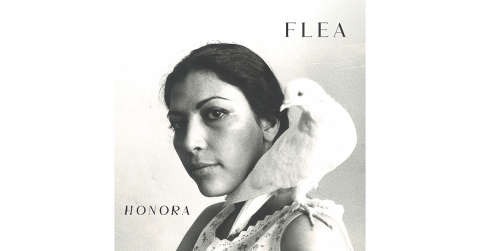 Flea Steps Out of the Funk Shadow with Jazz-Infused Solo Debut, "Honora"








Comments
Add a comment