

Fifty-four years ago, a single press statement ended the greatest band in history—and no one saw it coming
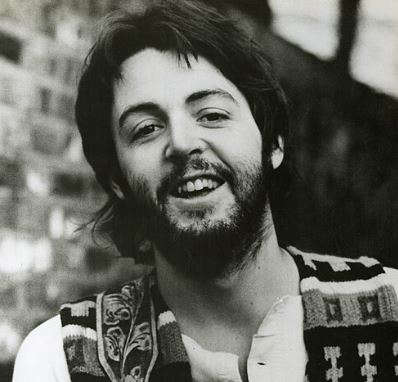
It was supposed to be just another Friday. But on April 10, 1970, the music world stopped. Paul McCartney, the baby-faced Beatle with the melodic bass lines and boyish charm, had done the unthinkable: he quit The Beatles.
In a self-written press release tucked inside advance copies of his first solo album, McCartney, he dropped the bomb: "I have no future plans to record or appear with The Beatles again, or to write any music with John." The words were simple, but the impact was seismic. The band that had defined a generation—who gave us "Hey Jude," "Let It Be," and "Yesterday"—was over.
McCartney’s exit didn’t come out of nowhere. Tensions had been simmering for years. The band’s final album, Let It Be, recorded in early 1969, had been a mess of arguments and half-finished songs. McCartney, the perfectionist, clashed with John Lennon, who was drifting toward Yoko Ono and his own solo work. George Harrison, frustrated by his limited creative role, had briefly walked out during the White Album sessions. Even Ringo Starr had quit temporarily in 1968, fed up with the bickering.
But McCartney’s departure was different. He wasn’t just taking a break—he was leaving for good. And he did it in the most public way possible, just days before his solo album hit stores. The timing wasn’t an accident. McCartney was his declaration of independence, a raw, homemade record where he played every instrument himself. Songs like "Maybe I’m Amazed" and "Every Night" proved he didn’t need The Beatles to make great music.
Lennon, who had actually left the band months earlier but kept quiet to avoid hurting business deals, was furious. When a reporter asked for his reaction, he snapped: "Paul hasn’t left. I sacked him." The bitterness was real. The two men who had written "She Loves You" and "A Hard Day’s Night" together were now trading barbs in the press.
Fans were devastated. The Beatles had been the soundtrack to their lives—first with the mop-topped innocence of "I Want to Hold Your Hand," then the psychedelic experiments of "Strawberry Fields Forever," and finally the raw emotion of "The Long and Winding Road." Now, it was all over.
Looking back, McCartney’s exit wasn’t just the end of a band—it was the end of an era. The Beatles had been more than a group; they were a cultural force. And when Paul walked away, he took a piece of the 1960s with him.
But if the breakup was painful, it also set the stage for something new. McCartney would go on to form Wings, write "Band on the Run" and "Live and Let Die," and become one of the most successful solo artists of all time. Lennon, too, found his voice, releasing Plastic Ono Band and "Imagine." Even Harrison and Starr carved out their own paths.
Yet for all their solo success, nothing would ever match what they created together. The Beatles were a once-in-a-lifetime alchemy—a mix of talent, timing, and brotherhood that could never be replicated. And on that April day in 1970, it all came crashing down.
Fifty-four years later, the question still lingers: What if they’d stayed together? But maybe that’s the wrong question. The Beatles didn’t just make music—they changed it. And when they broke up, they proved that even the greatest things must come to an end.
Sources:
- The Beatles: The Biography by Bob Spitz (2005)
- Paul McCartney: Many Years from Now by Barry Miles (1997)
- The Beatles Anthology
- Rolling Stone
- The New York Times
- McCartney (1970)
- Let It Be (1970)
- The Beatles: Get Back (2021)
Image: Public Domain. Author: Apple Records
 Bob Dylan’s Country Twist: How ‘Nashville Skyline’ Changed Everything
 The Echo of a Broken Chord: Remembering Kurt Cobain
 From Superstar to Sananda: The Journey of Terence Trent D’Arby
 Rock’s Greatest Anthems of Exodus and Freedom
 Resurrecting the Riff: A Journey Through Rock’s Spiritual Spring









Comments
Add a comment