
For decades, Hollywood’s biggest stars have tried to trade the silver screen for a gold record, proving that fame in one world doesn't always translate to the other
In the mid-1970s, David Soul was one of the most recognizable faces on television. As the cool, blonde half of the iconic duo Starsky & Hutch, he spent his weeks chasing criminals in a bright red Ford Torino. But in 1977, Soul decided to pivot from sirens to soft rock. He released "Don’t Give Up On Us," a tender, melodic ballad that showcased a surprisingly smooth vocal range. The song was an immediate sensation, climbing to the very top of the U.S. Billboard Hot 100.
While Soul became the definition of a "one-hit wonder" in America, his story had a different rhythm across the Atlantic. In Britain, he was a legitimate pop star, racking up five hits and another No. 1 with the upbeat, folk-tinged "Silver Lady." For Soul, the music wasn't just a side project; it was a passion that briefly overshadowed his badge and gun.
Soul was far from the only actor to be lured by the glow of the recording booth. The history of pop music is littered with "actor-singers" who caught lightning in a bottle exactly once.
In the 1980s, Eddie Murphy was the king of comedy, but he took a serious turn with the synth-heavy track "Party All the Time." Produced by Rick James, the song featured a catchy, repetitive hook and an inescapable club beat. Despite its massive success in 1985, Murphy’s music career never reached those heights again, leaving the track as a glittery artifact of 80s excess.
A similar phenomenon occurred in 1987 with Bruce Willis. At the height of his Moonlighting fame, Willis adopted a "Bruno" persona to release a cover of the R&B classic "Respect Yourself." Complete with a gritty harmonica solo and a soulful strut, the song cracked the Top 5. However, as Willis transitioned into a global action hero with Die Hard, his musical aspirations faded.
The decade also saw soap opera heartthrobs and TV cops join the fray. Jack Wagner, then a star on General Hospital, captured the hearts of millions with the 1984 power ballad "All I Need." The song reached No. 2 on the charts, but despite a few more minor entries, Wagner remained primarily a fixture of daytime television. Don Johnson, the epitome of cool on Miami Vice, also swapped his pastel suits for a microphone to record "Heartbeat," a power-rock track defined by heavy drums that pulsed through the Top 10 in 1986.
The 1990s brought a new wave of stars attempting to bridge the gap. Joey Lawrence, the breakout star of Blossom, capitalized on his "Whoa!" fame with the 1993 New Jack Swing-inspired track "Nothin' My Love Can't Fix." With its high-energy dance beat and Lawrence's teen-idol vocals, it hit No. 19 in the U.S., but he never returned to the Top 40.
Patrick Swayze moved the world to tears with the power ballad "She’s Like the Wind" from the Dirty Dancing soundtrack. The song, which Swayze co-wrote, featured his breathy, emotional vocals and became a staple of soft-rock radio. Years later, Jennifer Love Hewitt reached the charts with "How Do I Deal," an angst-filled pop-rock track from the I Still Know What You Did Last Summer soundtrack. While it showcased her vocal ability, she remained primarily known for her "Scream Queen" status.
By the mid-2000s, the "actor-to-singer" pipeline became a standard move for tabloid fixtures. Paris Hilton defined the era with "Stars Are Blind," a surprisingly well-received reggae-infused pop song that hit No. 18 in 2006. While Hilton continued to DJ and release club tracks, she never matched the mainstream success of her debut single.
Lindsay Lohan also sought to prove her musical mettle with "Rumors," a defiant anthem about living under the glare of the paparazzi. Though the song was a cultural touchstone and certified Gold, it remained her singular defining moment on the Billboard charts. Even Kim Kardashian briefly entered the fray with the 2011 track "Jam (Turn It Up)," though she later admitted the dance-pop experiment was a "one-and-done" venture that she largely regretted.
The appeal of the "one-hit wonder" for an actor is simple: it offers a direct connection to the audience that a scripted character cannot. Whether it’s David Soul pleading for a second chance or Jack Wagner singing about a desperate need, these songs allow stars to step out of their roles and into the spotlight as themselves. They may not have built discographies that rivaled the legends, but for one brief moment, they owned the airwaves.
 How Bob Dylan Rewrote the Nobel Prize for Literature
 New Music Monday: New Hard-Hitting Rock and Roots Voices Power The Countdown
 The B-Side That Stole The Show
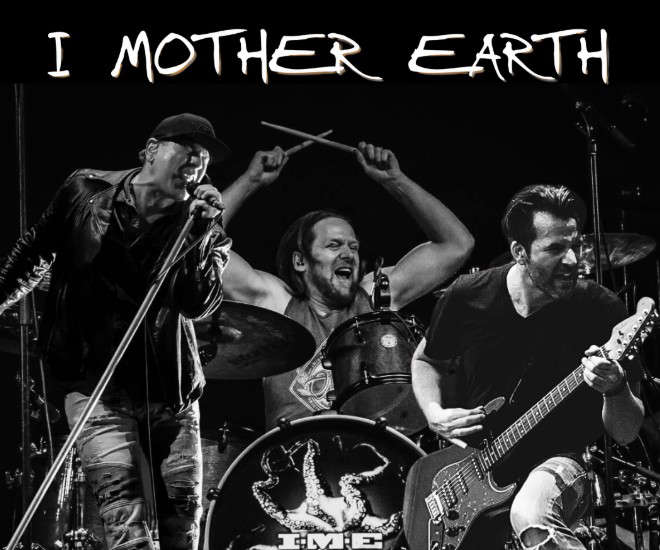 90s Canadian Rock Icons I Mother Earth Set to Shake the Algonquin Theatre
 Dance, Dance, Dance to the Radio: How Joy Division’s “Transmission” Sparked a Legacy










Comments
Add a comment