


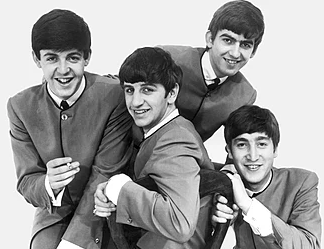
On April 4, 1964, the Fab Four achieved an unprecedented dominance of the American airwaves that remains the gold standard for pop-cultural impact
The spring of 1964 did not merely mark the arrival of a new musical trend; it signaled a total occupation of the American consciousness. While the nation was still healing from the tragedy of the previous November, four young men from Liverpool provided a technicolor antidote to the gloom. By the first week of April, the sheer mathematical improbability of British Invasion success reached its apex: for the first and only time in history, a single musical act held the top five positions on the Billboard Hot 100 simultaneously.
At the summit sat "Can’t Buy Me Love," a high-octane anthem of independence that had leapt from number twenty-seven to number one in a single week—a feat fueled by an unprecedented advance order of over two million copies. Just below it, the harmonica-driven "Twist and Shout" (which had surged to the number two spot) showcased the band’s raw, R&B-infused vocal power. Rounding out the top three was "She Loves You," the song that had effectively launched "Beatlemania" in the UK months prior.
The lower half of the top five was anchored by "I Want to Hold Your Hand" at number four and "Please Please Me" at number five. This concentration of hits was not just a testament to the band’s songwriting prowess but also a result of a chaotic scramble among American record labels. Because Capitol Records had famously turned down the band’s early offerings, smaller labels like Vee-Jay and Swan held the rights to their initial recordings. When the floodgates finally opened following the band's landmark appearances on The Ed Sullivan Show in February, every label simultaneously flooded the market with every Beatles master they owned.
The statistical saturation went far beyond the top five. That same week, the Beatles occupied an additional seven spots on the Hot 100, bringing their total to twelve entries. By the following week, that number would swell to an even more staggering fourteen songs. The phenomenon effectively broke the Billboard tracking system, which had never been designed to accommodate a single artist competing against themselves across multiple different publishing houses.
This era represented more than just sales figures; it was the definitive end of the post-war era of crooners and the birth of the modern rock era. The chart of April 4, 1964, remains a monolith in music history—a moment when the collective focus of a superpower was narrowed down to the harmonies of four teenagers from a port town across the Atlantic. While modern streaming has allowed artists like Drake or Taylor Swift to occupy vast swaths of the charts, the Beatles did so in an era of physical vinyl and limited radio play, making their 1964 monopoly an achievement of singular, unrepeatable cultural gravity.
Sources:
- Billboard Magazine
- The Beatles Anthology by The Beatles
- Recording Industry Association of America
- Wikipedia
Image: Publicity photo. Author: Dezo Hoffmann, Distributed by Capitol Records
 U2 Navigates Spiritual Renewal and Personal Inquiry on Surprise 'Easter Lily' EP
 A Family Affair: The Resurrection of Sublime
 The Ultimate "Digital Rug-Pull": A Soundtrack for the Strategically Pranked
 Flea Steps Out of the Funk Shadow with Jazz-Infused Solo Debut, "Honora"
 New Music Monday: Five tracks to warm up your week











Comments
Add a comment