


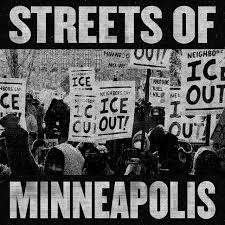
Springsteen delivers a raw, urgent response to a nation in turmoil with "Streets of Minneapolis," a powerful protest anthem that serves as the gritty, spiritual successor to his 1993 classic.
In the freezing early weeks of the new year, the silence of the American Midwest was broken by a familiar, gravelly rasp. When Bruce Springsteen released "Streets of Minneapolis" last month, it didn't arrive with the typical fanfare of a global superstar. Instead, it landed like a telegram from a front line—a raw and immediate response to a city, and a country, grappling with a new wave of social and political unrest. The story behind the song is one of frantic, late-night creativity and a veteran artist reclaiming his role as a musical cartographer of the American soul.
The genesis of the track was an act of sudden, moral urgency. Following the eruption of civil demonstrations in Minnesota in early January 2026, Springsteen reportedly abandoned the sessions for his planned soul-covers sequel at his home studio in New Jersey. Sources close to the E Street camp suggest the singer was moved by a specific, viral photograph of an elderly veteran standing between protesters and police lines in the Twin Cities. That image became the "spark in the dry grass" for what is now being hailed as his most significant protest anthem since the 1990s.
Musically, "Streets of Minneapolis" is a spiritual and sonic successor to his 1993 masterpiece, "Streets of Philadelphia." However, where Philadelphia was defined by a lonely, synthesized heartbeat, Minneapolis is built on the physical weight of the E Street Band. The track begins with a stark, distorted acoustic guitar—Springsteen’s 1950s Gibson—tuned down to a low, somber growl. It’s a sound that evokes the biting wind of a Minnesota winter, cold and unforgiving. Producer Ron Aniello describes the atmosphere of the breakneck forty-eight-hour recording session as "electric and mournful," with Springsteen insisting on a "live-off-the-floor" vocal take that refused to polish the cracks in his voice.
This new anthem marks a significant evolution in Springsteen's "ghost of history" songwriting. While "Streets of Philadelphia" focused on the internal, physical wasting of a single man, "Streets of Minneapolis" pivots to the external. It is a wide-angle lens on a city in turmoil. The "ghosts" in this new track aren't just individuals; they are the memories of past promises and the shadows of a community struggling to stay upright in a sub-zero political climate. Lyrically, the song avoids easy slogans, acting instead as a narrative-driven piece of journalism that name-checks local landmarks like the Stone Arch Bridge and the frozen banks of the Mississippi.
Perhaps the most striking element of the song’s construction is its "witness" quality. Like "American Skin (41 Shots)," it was born from a specific, searing moment of social friction. However, at seventy-six years old, Springsteen’s voice has a weathered, archival quality that transforms the track into a permanent landmark. The addition of the "E Street Choir" adds a gospel-tinged layer of hope to the final chorus, suggesting that even in the deepest winter, there is a communal warmth to be found. As the track closes with a fading, rhythmic thud—mimicking a heartbeat or a distant drum—it reminds us that Springsteen remains a vital witness to the American experiment, proving that the most powerful music is often that which is written in the heat of the moment and the heart of the cold.
Sources:
- Rolling Stone
- The Star Tribune
- Billboard
- E Street News
- The New Yorker
 The Ultimate "Digital Rug-Pull": A Soundtrack for the Strategically Pranked
 Flea Steps Out of the Funk Shadow with Jazz-Infused Solo Debut, "Honora"
 New Music Monday: Five tracks to warm up your week
 Willie Nelson’s Outlaw Tour Enters Second Decade
 Black Crowes Soar Again with A Pound of Feathers











Comments
Add a comment