
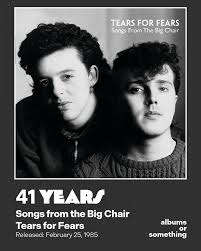
From primal screams to global anthems, we revisit the 1985 masterpiece that transformed Roland Orzabal and Curt Smith from synth-pop outsiders into the defining voices of a generation.
In February 1985, two young men from Bath, England, released an album that shouldn’t have worked. It was dense, psychologically heavy, and named after a 1970s TV movie about multiple personality disorder. Yet, Songs from the Big Chair didn't just work—it dominated. Forty years later, as the band celebrates with a massive anniversary reissue and a sold-out Las Vegas residency, the "Big Chair" remains as comfortable and as challenging as ever.
Tears for Fears—comprised of Roland Orzabal and Curt Smith—had already tasted success with their 1983 debut The Hurting. But where that record was a claustrophobic exploration of adolescent trauma and Arthur Janov’s primal scream therapy, Songs from the Big Chair was a reach for the sky. Working in a relaxed home-studio environment at keyboardist Ian Stanley’s house, the duo and producer Chris Hughes traded their stark synthesizers for expansive, soulful arrangements. The title itself—a reference to the movie Sybil—symbolized a place of safety and authority. For Orzabal and Smith, this was the moment they stopped being victims of their past and started "ruling the world."
The album’s success was propelled by a string of singles that became the DNA of 1980s radio. "Shout," a six-minute protest anthem, hit No. 1 in the U.S. and remains a universal mantra for emotional release. "Everybody Wants to Rule the World" was actually the last song written for the album, added at the eleventh hour to balance the record's darker themes. Its shuffling 12/8 beat and Curt Smith’s breezy vocals sent it straight to the top of the Billboard Hot 100. Then there was "Head Over Heels," a masterclass in "sophisti-pop" that reached No. 3 in the U.S., accompanied by a whimsical library-set music video that became an MTV staple. Even "Mothers Talk," the album's lead UK single, showcased a new, aggressive wall-of-sound production style.
What keeps Songs from the Big Chair relevant in 2026 isn't just nostalgia; it's the sheer craftsmanship. Tracks like the jazz-flecked "The Working Hour" and the Robert Wyatt-inspired "I Believe" proved that Orzabal and Smith were far more than just synth-pop poster boys—they were progressive composers. The 40th-anniversary celebrations include a definitive reissue featuring a Steven Wilson spatial audio mix and previously unreleased session takes. Today, as their songs find new life in films and covers by modern stars, Tears for Fears have achieved the ultimate pop-rock victory: they created something that sounds exactly like 1985, yet somehow, never sounds old.
Sources
- Tracking Angle
- Albumism
- Consequence of Sound
- Wikipedia
- Louder Sound
 The Last Movement: The Virtuoso Who Redefined the Keyboard
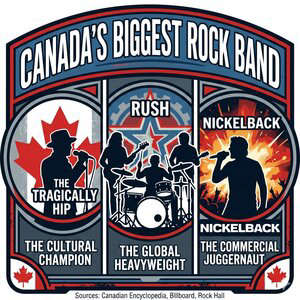 Northern Stars: The Battle for Canada’s Biggest Rock Band
 New Music Monday: Fresh Anthems for a New Season
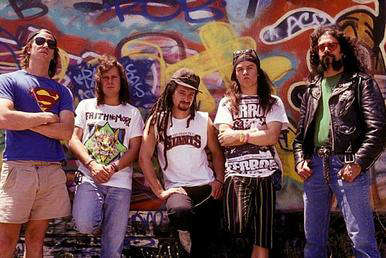 Inside the Quiet End of Faith No More
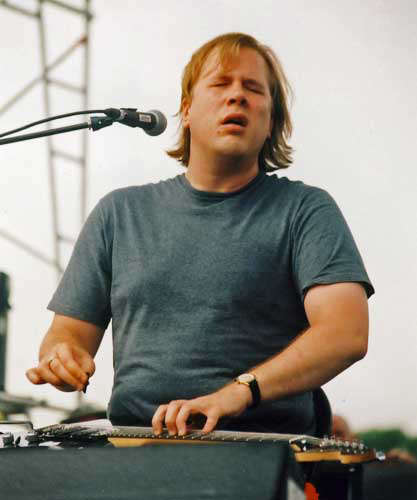 The Life and Legacy of Jeff Healey









Comments
Add a comment