


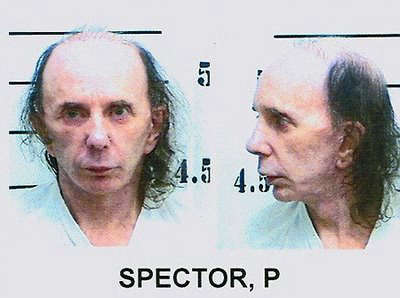
On this day, Producer Phil Spector, the architect of the “Wall of Sound,” who reshaped popular music with timeless hits passed away in disgrace and a life sentence for murder
Phil Spector, one of the most influential — and controversial — figures in 20th‑century popular music, died on January 16, 2021, at age 81, while serving a prison sentence for murder. His life was defined by towering musical achievements and a shocking personal downfall.
Born Harvey Phillip Spector in New York City in 1939, he first tasted success as a teenager with the Teddy Bears’ 1958 hit “To Know Him Is to Love Him.” But it was his work behind the mixing board that would define him. Spector developed the so‑called “Wall of Sound,” a production method that layered instruments and vocals into dense, echo‑rich tracks that became the template for modern pop recordings. Working with studio musicians known as the Wrecking Crew, he transformed songs into what he called “little symphonies for the kids,” a sound that dominated early 1960s radio.
At the height of his powers, Spector produced a string of classic tracks that still resonate today. These included “Spanish Harlem” for Ben E. King; “Da Doo Ron Ron” for the Crystals; “Be My Baby” and “Baby, I Love You” for the Ronettes; and the Righteous Brothers’ monumental “You’ve Lost That Lovin’ Feeling,” one of the most‑played songs in American radio history.
His influence extended well beyond girl groups. Spector worked with legends across genres: producing John Lennon’s “Imagine” and tracks for George Harrison; overseeing the Beatles’ final album Let It Be; and even taking on punk icons The Ramones for their 1980 record End of the Century.
Yet alongside his genius was a darker side. Known for his eccentric personality and volatile behavior, Spector’s relationships and reputation deteriorated in later decades. In 2003, actress Lana Clarkson was found shot dead in his California home. After an initial mistrial, a retrial in 2009 resulted in a second‑degree murder conviction and a sentence of 19 years to life. He remained in prison until his death.
Spector’s legacy in music is undeniable: his techniques influenced generations of artists and producers, from Brian Wilson of the Beach Boys to countless others who followed. At the same time, his life story stands as a stark reminder of how personal demons and criminal actions can overshadow creative brilliance.
Sources:
• The Guardian
• Encyclopaedia Brittannica
• Rhino
• Wikipedia
 The Last Ride of the Prince of Darkness: Ozzy’s Final Choice
 New Music Monday: Five Tracks to kick off March
 The Big Mix: Inside the 2026 Rock & Roll Hall of Fame Ballot
 The Roar Returns: How Mumford & Sons Found Their Fight with 'Prizefighter'
 The Silent Scroll: Why the Architects of Rock and Alt-Pop are Leaving TikTok











Comments
Add a comment