

New Order was keen to move past post punk after the death of Ian Curtis and resulting break up of Joy Division
As the electronic pulse of the 1980s began to throb, a single track emerged that would redefine the relationship between man and machine. New Order s "Blue Monday" wasn't just a song; it was a complex architecture of stolen sounds and DIY engineering.
The floor of Britannia Row Studios in late 1982 was a chaotic web of soldering irons and circuit boards. For the members of New Order - formerly Joy Division - Bernard Sumner, Peter Hook, Stephen Morris, and Gillian Gilbert the transition from post-punk icons to electronic pioneers was a desperate act of survival.
They wanted to build a track so automated they could simply press "play" and leave the stage for the bar, but the technology of the era was far from cooperative. The construction of "Blue Monday" was an exercise in sonic layering and "happy accidents."
The track’s legendary, thundering kick-drum intro was actually the result of a technical glitch on the Oberheim DMX drum machine. While programming the beat, the band accidentally skipped a note, creating a syncopated "hiccup." They also famously recorded the kick drum playing through a studio monitor to capture the room's natural resonance, giving the machine a physical, "live" soul. The song's haunting "choir" sounds, which provide a ghostly counterpoint to the mechanical beat, were a product of early digital sampling on the E-mu Emulator I.
The band famously learned to use the expensive machine by recording their own flatulence before settling choral stabs inspired by Kraftwerk.
This was layered against a 6-string bass hook from Peter Hook that was actually inspired by an Ennio Morricone spaghetti western soundtrack. Gillian Gilbert was tasked with the painstaking manual labor of programming the sequence. Before the advent of MIDI, every note had to be inputted as binary code. She had the entire song mapped out on A4 paper taped together, stretching the length of the studio like a giant knitting pattern. One missing note in her sequence caused the synth melody to fall slightly out of sync with the rhythm a mistake that stayed in the final mix because the band felt it added an eerie, human tension.
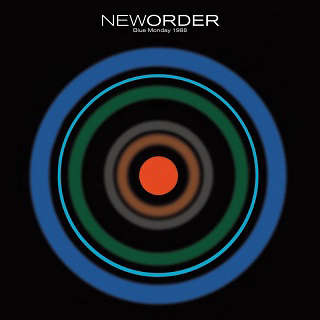
Upon its release in March 1983, the impact was transformative. At over seven minutes long, it defied radio conventions yet became an anthem. It was given a remix in 1988 and producer Quincy Jones was recruited for the project.
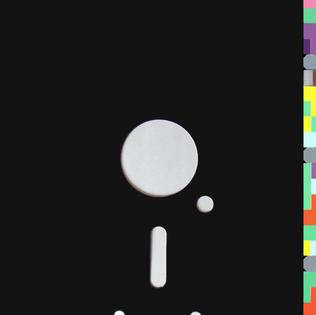
Designed by Peter Saville, the sleeve was die-cut to resemble a 5¼-inch floppy disk. Because of the expensive production costs, Factory Records initially lost money on every copy sold, yet "Blue Monday" remains the best-selling 12-inch single of all time.
It proved that the future of music wasn't just played on instruments it was programmed with a heart.
Sources:
- The Guardian
- Sound on Sound
- New Order
- BBC Radio 6 Music
- Factory Records
Images: Fair use. Author: Peter Saville
 A Family Affair: The Resurrection of Sublime
 The Ultimate "Digital Rug-Pull": A Soundtrack for the Strategically Pranked
 Flea Steps Out of the Funk Shadow with Jazz-Infused Solo Debut, "Honora"
 New Music Monday: Five tracks to warm up your week
 Willie Nelson’s Outlaw Tour Enters Second Decade











Comments
Add a comment