

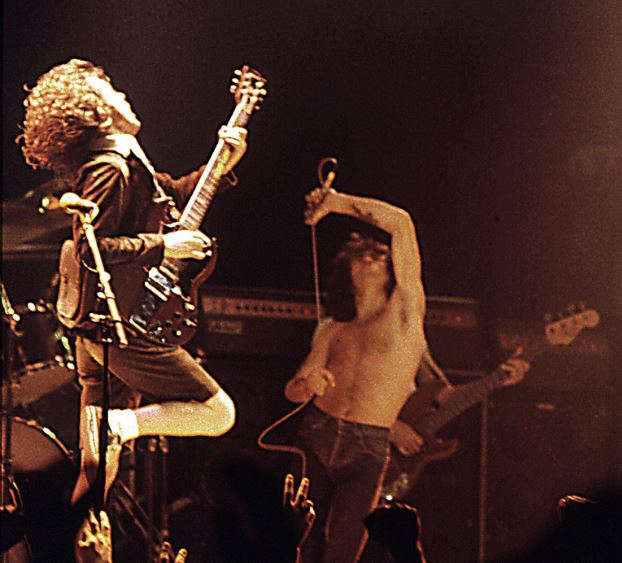
On the anniversary of his tragic passing in London, we look back at the life, the lyrics, and the lightning-bolt energy of AC/DC’s definitive wild child.
The night of February 18, 1980, began like any other for Bon Scott. It was a cold London Tuesday, and the 33-year-old frontman was doing what he did best: living fast. After a night of heavy drinking at the Music Machine club, Scott was left to sleep it off in a friend's Renault 5. When the morning sun hit the pavement of East Dulwich, the party was over. The man who gave a voice to the rebellious spirit of a generation was gone, victim to acute alcohol poisoning.
To understand the hole left by Scott’s passing, you have to look back to 1974. AC/DC was a struggling pub band in Australia until they met Bon—a man nearly a decade older than the Young brothers, with a mischievous grin and a voice that sounded like it had been soaked in whiskey and dragged across gravel. He wasn't just a singer; he was a street poet for the misunderstood.
Between 1974 and 1979, Scott fronted seven albums that defined the "high voltage" sound. He breathed life into the bagpipe-infused defiance of "It's a Long Way to the Top (If You Wanna Rock 'n' Roll)" and the high-speed storytelling of "Let There Be Rock." His charisma held the audience captive, but it was his songwriting that truly set him apart.. He wrote about the grind of the road, the thrill of the chase, and the sheer joy of being a "problem child."
By 1979, the band had finally kicked down the door to international superstardom with Highway to Hell. The title track, "Highway to Hell," became Scott’s unintended epitaph—a roaring celebration of life on the edge. Paradoxically, as the album climbed the charts, Scott was nearing his breaking point. Friends recalled a man who was exhausted by the very lifestyle he championed, yet unable to slow down.
His death came at a cruel juncture. AC/DC was weeks away from beginning rehearsals for their next record. The rock world went into mourning, fearing the band would fold without their charismatic anchor. Instead, with the blessing of Scott’s family, Angus and Malcolm Young recruited Brian Johnson and channeled their grief into Back in Black. The album’s all-black cover and the tolling of the "Hells Bells" were a direct salute to their fallen brother.
Bon Scott didn't live to see AC/DC become the biggest band on the planet, but his DNA is in every riff they play. He remains the archetype of the rock ‘n’ roll frontman: dangerous, charismatic, and entirely authentic. He lived the lyrics he wrote, and forty-six years later, his voice still cuts through the static, reminding us that while the singer might be gone, the rock ‘n’ roll damnation is eternal.
Sources:
- Mick Wall, "AC/DC: Hell Ain't a Bad Place to Be,"
- Clinton Walker, "Highway to Hell: The Life and Death of Bon Scott,"
- Rolling Stone
- Wikipedia
Image: This file is licensed under the Creative Commons Attribution 2.0 Generic license. Author:
Lost Parables from Ballymena, Northern Ireland. ©jameshughes
 Sturgill Simpson Dies to Become Johnny Blue Skies
 The Foo Fighters’ Cryptic "Evaluation" Points to a Punk-Fueled Reset
 New Music Monday: Five Tracks that look to the return of the sun
 World Radio Day - Radio's Enduring Power: Past, Present, Future
 Huntsville Festival of the Arts to Feature David Suzuki in Hybrid Theatre Performance













Comments
Add a comment