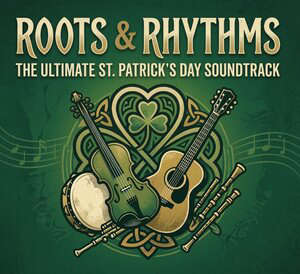
Ditch the gimmicks for a soulful journey through Ireland’s musical heritage, featuring legendary anthems from The Dubliners to The Cranberries.
Forget the plastic shamrocks and the emerald-dyed beer. This St. Patrick's Day, why not trade the cliché for a true taste of the Emerald Isle? Skip the playlist of gimmicky songs and instead, curate a collection that truly captures the spirit, energy, and, yes, a touch of the melancholy, that defines Irish music and the very soul of the holiday itself. This isn't just about a party; it's about connecting to a rich cultural heritage, and there's no better way than through song.
Irish music, in its myriad of forms, is a conversation through time. It’s a tapestry woven with the threads of traditional folk, the fierce spirit of rebellion, the poetic laments of love and loss, and the infectious energy of a good pub session. It’s a genre that transcends borders, finding a home in hearts around the globe, yet it remains intensely rooted in its birthplace.
So, let's build a playlist that does justice to this legacy, a collection that will move you, make you dance, and perhaps, even bring a tear to your eye. Here are the tracks that deserve a place in any authentic St. Patrick's Day celebration, from the traditional standards to the modern masters.
Any journey into Irish music must begin with The Dubliners. They are, in many ways, the godfathers of the modern Irish folk revival. And there's no better song to start with than the boisterous "Seven Drunken Nights." This isn't a song of deep contemplation; it's a rollicking, lighthearted tale of a man who returns home drunk, night after night, to find a different set of strange items in his house. His "wife" offers up increasingly absurd, yet entirely unconvincing, explanations. It’s a perfect opener, setting a tone of humor and celebration.
Yet, the Irish songbook isn't merely a collection of drinking tunes. Beneath the surface lies a fierce tradition of social commentary that has chronicled the island's struggles and triumphs for centuries. Few songs capture this with more devastating beauty than "The Fields of Athenry." Made famous by The Dubliners and later by Pete St. John, it's a song of profound loss and resilient hope, set against the backdrop of the Irish Potato Famine. The lyrics tell the story of a man who stole corn to feed his starving family and is sentenced to the penal colony of Botany Bay. It’s a song that can hush a room, a powerful reminder of the deep scars history has left on the Irish psyche.
Another absolute essential is "The Foggy Dew." Often associated with The Chieftains, it's an anthem of Irish republicanism, commemorating the 1916 Easter Rising. The Chieftains, with their masterful command of traditional instruments, including the uilleann pipes and the harp, imbue this song with a sense of solemn majesty that speaks to the unyielding spirit of the Irish.
While the classics are important, Irish music continued to evolve and find new voices. The Pogues, in the 1980s, brought a punk-rock energy to traditional Irish sounds. Their song, "Fairytale of New York," is often hailed as a masterpiece that resonates all year round. It’s a complex, beautifully flawed love story between two down-on-their-luck immigrants in New York City. It doesn't shy away from harsh realities, but it celebrates the resilience and the enduring power of human connection.
No playlist would be complete without the sheer power of traditional song, and few singers could command this like Luke Kelly. His voice made songs like "Raglan Road" legendary. Based on a poem by Patrick Kavanagh, it's a powerful meditation on unrequited love and the fleeting nature of beauty. Kelly's delivery is raw and emotionally charged, holding audiences in spellbound silence.
Then, there's Van Morrison. While his work often defies easy categorization, his album Astral Weeks is a masterpiece that draws deep from the well of Irish poetic tradition. The title track, "Astral Weeks," is a beautiful meditation on spirituality and love. It is undeniably infused with the same poetic sensibility that runs through so much of the best Irish music.
The 1990s saw the rise of The Cranberries, led by the unmistakable voice of Dolores O'Riordan. Their hit "Zombie" is a visceral, haunting protest song written in the wake of the Warrington bombings. With its heavy guitars and O'Riordan’s distinctive yodel-like vocals, it captures the frustration and grief of a generation tired of the "Troubles." It remains one of the most powerful rock anthems ever to come out of Ireland, proving that Irish music can be as heavy as it is melodic.
The late Sinéad O'Connor was another seismic force. While her cover of "Nothing Compares 2 U" is her most famous, her collaborations with The Chieftains on tracks like "The Foggy Dew" demonstrated her ability to inhabit a traditional song. Her raw, almost painful vocals bring an intensity to the history of the Rising that is simply unforgettable.
And finally, there is U2. Their anthems have conquered the world, but songs like "Sunday Bloody Sunday" are deeply rooted in their heritage. The song is a direct response to the events of 1972 in Derry. It’s not a simple political statement; it's a plea for peace, a condemnation of violence, and a cry for justice that still feels urgent decades later.
So, this St. Patrick's Day, give the clichéd playlist a rest. Instead, listen to these songs. Pay attention to the stories they tell and the emotions they evoke. You'll find a connection to a people whose spirit is far too big to be contained in a plastic shamrock. This is the real sound of St. Patrick's Day.
Sources:
- The Guinness Encyclopedia of Popular Music
- The Irish Times - Archive of Irish Folk Traditions
- History of the 1916 Rising (National Library of Ireland)
- U2.com Official Discography and History
- The Cranberries - Official Band Archive
 New Music Monday Warms The Return Of Old Man Winter
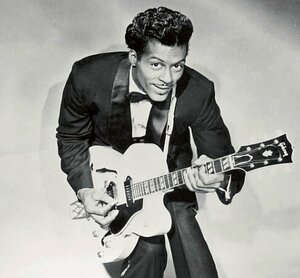 The Architect of the Teen Beats: How "Roll Over Beethoven" Redrew the Map
 The Infinite Groove: Celebrating Pi Day Through the Lens of Music
 Gravenhurst celebrates the 125th Anniversary of the Opera House
 A playlist for Friday The 13th








Comments
Add a comment