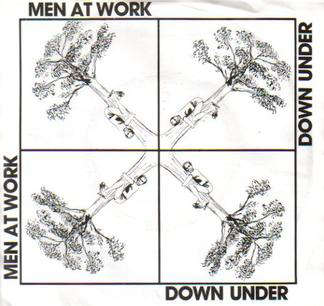
From Melbourne pub stages to the top of the global charts, the story of Down Under is a masterclass in Aussie spirit
Long before they were headlining the world’s biggest stages, Men at Work were a scrappy duo playing local Melbourne bars. Founders Colin Hay and Ron Strykert originally performed Down Under as a stripped-back acoustic number, long before the iconic flute riff—and the worldwide fame—became part of the equation. It wasn't until the band expanded into a quintet, adding the late Greg Ham on flute and keyboards, that the song truly found its distinctive air.
By early 1983, Men at Work achieved a feat no Australian act had ever managed: holding the No. 1 spot for both their debut album, Business as Usual, and the single Down Under simultaneously in the United States, the UK, and Australia. While the world danced to the reggae-ish beat and sang along about Vegemite sandwiches, the song’s origins were far more grounded in social commentary. Colin Hay has often noted that the lyrics weren't meant as a simple celebration, but rather a reflection on the overdevelopment and loss of spirit he felt was happening in Australia at the time.
The band’s meteoric rise was fueled by a string of hits that remain staples here on The Bay, including the paranoid groove of Who Can It Be Now? and the driving energy of Be Good Johnny. Their follow-up album, Cargo, kept the momentum alive with deeper, more introspective tracks like Overkill and the anti-war anthem It's a Mistake.
However, the legacy of their biggest hit wasn't without controversy. Decades after its release, a 2007 appearance on the music trivia show Spicks and Specks pointed out a similarity between Greg Ham’s flute riff and the classic nursery rhyme Kookaburra Sits in the Old Gum Tree. This led to a high-profile legal battle that eventually saw the court award 5% of the song's royalties to the owners of the nursery rhyme's copyright.
Despite the legal hurdles and the band’s eventual disbandment in 1986, Down Under has secured its place as Australia’s unofficial national anthem. Whether it’s being played at the closing ceremony of the Sydney Olympics or blasting out of a car radio in Huntsville, the song remains a timeless testament to the power of a fun little ditty that accidentally captured the heart of a nation.
Sources:
- American Songwriter
- Wikipedia
- Clayton Utz
- Aitken Partners
- YouTube Music
- Top40weekly
 Jack, Diane, and the Summer of '82: How John Mellencamp Made Chart History
 How Toots Hibbert Gave Reggae Its Name and Soul
 On This Day: Nirvana’s ‘Smells Like Teen Spirit’ Rewrites Rock History
 New Art Exhibition Puts a Human Face on Huntsville’s Food Insecurity
 Light 'Em Up: Zippo's Ultimate Lighter-in-the-Air Anthem







Comments
Add a comment