


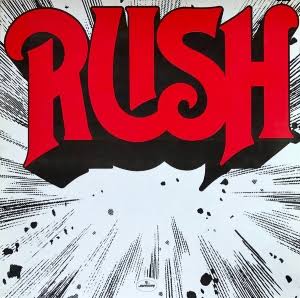
When Rush hit the stage at Milwaukee’s Riverside Theater in November 1974, fans came to hear the songs from their hit debut album—only to discover the drummer who recorded them was already gone, replaced by a newcomer named Neil Peart
For rock fans filing into Milwaukee’s Riverside Theater on November 15, 1974, the name on the marquee was Rush, and the soundtrack in their heads was the Canadian trio’s self-titled debut album. Thanks to heavy rotation on influential Midwest FM stations like Cleveland’s WMMS, tracks like "Working Man," "Finding My Way," and "In the Mood" had turned the band into an overnight sensation south of the border.
Yet the drummer propelling those songs onstage that night had never played a single note on the record people bought at the store. Neil Peart—the man who would become synonymous with Rush’s sound and soul—was not an original member, and in late 1974, he was still the new guy proving himself behind another man's drum parts.
When Rush recorded their debut album in Toronto, the lineup featured Geddy Lee on bass and vocals, Alex Lifeson on guitar, and co-founder John Rutsey on drums. Rutsey was a driving force in the band's early years, bringing a heavy, blues-rock backbone to radio favorites like "Need Some Love" and "What You're Doing."
By July 1974, however, just as the debut album was gaining momentum in the United States and a major tour was booked, Rutsey stepped away. Struggling with complications from Type 1 diabetes and growing wary of the grueling life on the road—as well as diverging from Lee and Lifeson’s increasingly complex musical direction—Rutsey exited the band he helped build, leaving Rush without a drummer weeks before their first U.S. arena dates.
Enter Neil Peart. Raised in St. Catharines, Ontario, and recently returned from a stint chasing music dreams in England, Peart arrived at a Toronto audition in late July 1974 driving a battered Ford Pinto with his drums packed in trash cans. Within minutes of playing, his ferocious, Keith Moon-inspired energy convinced Lee and Lifeson they had found their man.
Peart officially joined on July 29, 1974—just over two weeks before Rush’s August 14 U.S. tour kickoff in Pittsburgh. Because there was no time to write new material, Peart’s first job was to master Rutsey’s studio arrangements on "Working Man," "Here Again," and "Take a Friend."
By the time the tour reached Milwaukee that November, audiences were witnessing a fascinating musical handoff. Peart honored the core grooves of the debut album, but he couldn't help injecting his own explosive signature into the songs. Live versions of "Working Man" stretched into towering showcases of precision fills and thunderous double-bass work, signaling that this was no longer simply a Led Zeppelin-style bar band.
Even more importantly, Peart was quietly filling a void offstage. Neither Lee nor Lifeson enjoyed writing lyrics, and on the tour bus between cities like Milwaukee, Peart—an obsessive reader of science fiction and literature—began handing his bandmates notebooks full of original words.
Just months after that Riverside Theater performance, Rush headed back into the studio to record Fly by Night, released in February 1975. For the first time, fans heard what Peart truly brought to the table—not as a tour replacement playing John Rutsey’s tracks, but as the band's rhythmic powerhouse and primary lyricist on classics like "Anthem," "By-Tor & the Snow Dog," and "Fly by Night."
Looking back at November 1974, the Milwaukee stop captures a rare moment in rock history: a band touring behind a breakthrough debut album while the musician who would define their legacy was still earning his stripes as the newcomer behind the kit.
Sources
- Rush.com
- Lee, Geddy (2023): My Effin' Life (HarperCollins)
- WMMS
- Peart, Neil (2011): Far and Away: A Prize Every Time (ECW Press)
 Inside the 2026 Rock & Roll Hall of Fame Induction Ceremony
 New Music Monday: shoegaze haze, Heavy rock collaborations, gritty americana, and Canadian alt-rock fire up the chart
 DJ and folk-rocker Stephen Stanley brings secret show to Port Sydney
 Anarchy In The Charts: How 12 tracks of punk rage rewrote modern rock radio
 Sounds of Solace: The enduring music of Remembrance Day in Canada









Comments
Add a comment