

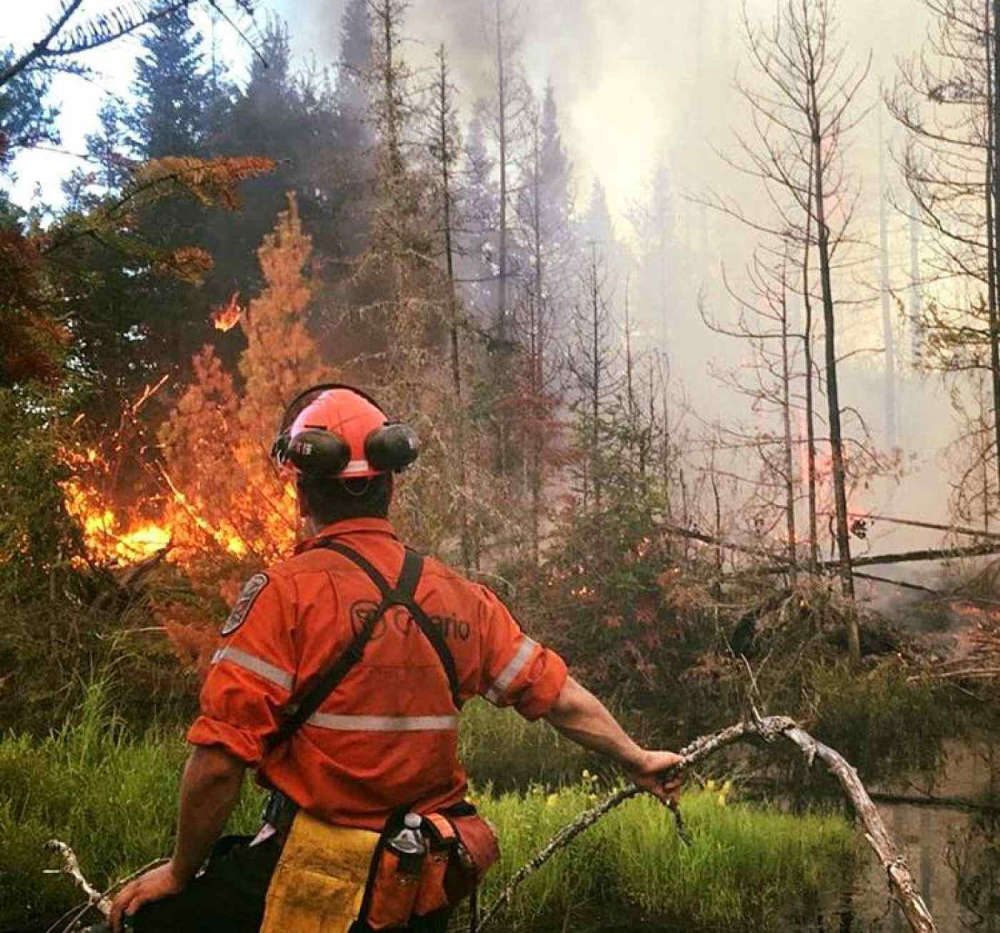
Property owners can reduce the risk of wildfires spreading around their properties
The Ministry of Natural Resources (MNR) warned Lake of Bays about the importance of wildfire mitigation measures, in the June 2, 2026, Council meeting.
Southern Region Fire Advisor with the Ministry of Natural Resources, Ken Cox, delivered a presentation on wildland fire mitigation and preparedness, focusing on measures property owners can take to reduce wildfire risk around homes and cottages through vegetation management and fuel reduction.
He advised that majority of structures lost were from embers and sparks coming from a fire and landing on it. “90% of my structural losses are from a buildup of fire fuels on a structure.”
He explained that a fire ember can travel about a kilometre or two and start a fire on a deck or roof with dried leaves on it - which he refers to as “fuel” – and start a structural fire.
Direct flame contact and radiant heat were also identified as significant risks, with extreme heat capable of damaging siding, breaking windows and igniting structures.
He also indicated that spring is an especially vulnerable time of year even three days after a snow melt. He said, “There’s no broad leaf component shading the forest floor… So, in springtime, right after snow leaves is your highest period of hazard for fuel until it greens up.”
He continued that a heavy rain fall isn’t necessarily a safety net which is why fire bans are not always lifted afterward added Cox. He explained, “It’s because the forest fuels have gotten so dry that they’ll shed off the rain and it doesn’t have enough time to absorb into those fuels.”
Cox outlined the importance of maintaining defensible space around structures, including managing vegetation within designated zones surrounding a building.
In the intermediate zone, extending from 1.5 to 10 metres from a structure, residents are encouraged to reduce combustible fuels and consider planting fire-resistant vegetation. The presentation noted that deciduous trees such as maple, birch, oak, poplar and basswood are generally less flammable than coniferous species including spruce, fir, pine and cedar.
The extended zone, which extends from 10 to 30 metres from a structure, focuses on reducing fire intensity by removing some flammable fuels rather than eliminating vegetation entirely. Recommended measures include pruning lower branches on coniferous trees and increasing spacing between tree crowns to reduce the potential for fire to spread from tree to tree.
The presentation also highlighted the scale of wildfire activity in Ontario. During the 2021 fire season, 1,201 wildfires were actioned by the Ministry of Natural Resources, with 78 per cent caused by lightning and 22 per cent caused by human activity. The season saw 793,533 hectares burned, the highest total since 1995.
Cox indicated that he’s seen homeowners save their structures by practicing the national FireSmart Program and recommended people visit firesmart.ca to learn about wildfire preparedness and measures residents can take to reduce risks on their properties.
 Raise Muskoka Campaign surpasses $53 million as matching challenge fully met
 Bracebridge official recognized with Prestige Award
 Muskoka Fire Danger Rating Lowered to MODERATE
 Lake Of Bays hosting Official Plan meeting
 Late night crash results in impaired charges









Comments
Add a comment