


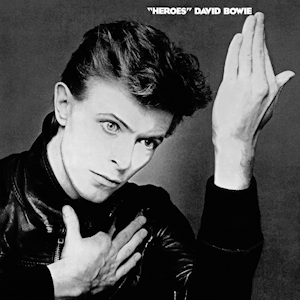
On this day, October 14th, David Bowie releases Heroes - the first song from the Berlin Trilogy saying good bye to the Thin White Duke
In the late autumn of 1976, David Bowie arrived in West Berlin exhausted and hunted, having nearly burned himself out in Los Angeles. Wasted to skin and bones and subsisting largely on red peppers, milk, and cocaine, he was trapped inside the paranoid, occult-obsessed psychological fortress of the "Thin White Duke." Driven by a desperate need to kick his drug addiction and drawn to the thriving European avant-garde and krautrock scenes, Bowie made a radical break. He packed his belongings, rented a sparsely furnished apartment over an auto repair shop in the gritty Schöneberg district, and set out to strip his art and life down to the bare essentials.
What followed was one of the most daring artistic reinventions in rock history: the Berlin Trilogy. Comprising three consecutive studio albums—Low (1977), “Heroes” (1977), and Lodger (1979)—this triptych, crafted in collaboration with sonic architect Brian Eno and longtime producer Tony Visconti, discarded the theatrical pop and soul of his past. In its place, Bowie forged a chilly, hypnotic hybrid of ambient soundscapes, krautrock repetition, electronic experimentation, and stark introspection. It was a commercial risk that permanently altered the DNA of modern alternative music.
Chapter One: Low and the Descent into the Void
When RCA Records first received the master tapes for Low in early 1977, the label panicked. Fearing commercial suicide, executives reportedly tried to buy Bowie out of his contract, while others begged him to release a more traditional pop record.
Low was divided into two distinct halves, a structural masterstroke. Side one featured fractured, anxious pop songs where Bowie’s voice was treated less as a traditional lead instrument and more as another texture in the mix. Tracks like "Sound and Vision"—which became a surprise UK Top 3 hit—punctuated angular, jittery synth-pop with an infectious, melancholy groove.
Side two, however, plunged listeners into uncharted territory. Working closely with Brian Eno, Bowie abandoned lyrics entirely for deeply atmospheric, melancholic soundscapes. Instrumental tracks like "Warszawa" (inspired by a gloomy train stop in Poland) evoked the gray, post-war trauma of a divided Europe. Using early synthesizers like the EMS VCS 3, Eno and Bowie treated sound not as melody, but as space and weather. They weren't just writing songs; they were capturing the ghosts of a broken city
Chapter Two: “Heroes” and the Triumph of the Spirit
If Low was an internal excavation of grief and addiction recovery, its successor was a defiant declaration of life. Released later that same year, “Heroes” captured Bowie at his most creatively energized, fueled by the liberating atmosphere of a city living on the geopolitical fault line of the Cold War.
Recorded at Hansa Studios—located just feet from the Cold War's most infamous divide—the album pushed deeper into avant-garde territory while maintaining a raw, vital pulse. At its center stood the triumphant title track, "Heroes." Co-written with Brian Eno, the song was propelled by the soaring, feedback-drenched guitar work of King Crimson virtuoso Robert Fripp, who flew in from New York and recorded his iconic parts in just a single afternoon without ever having heard the track beforehand.
The song's emotional core sprang directly from the studio window, where Bowie watched producer Tony Visconti embracing backing singer Antonia Maaß in the shadow of the Berlin Wall. While "Heroes" was only a modest hit upon its initial release, it gradually grew into one of Bowie’s defining masterpieces—an enduring hymn to romance, hope, and human defiance against impossible odds.
Other tracks, such as "Beauty and the Beast" and the avant-funk march of "Joe the Lion," proved that experimental music could still possess a fierce, muscular groove.
Chapter Three: Lodger and the Detour Out
The trilogy concluded with 1979’s Lodger, though geographically, Bowie had already left Berlin behind. Recorded between Switzerland and New York, Lodger was a travelogue of dislocation, identity crises, and cultural displacement.
While it lacked the icy ambiance of its predecessors, it pushed sonic boundaries through subversion. Bowie and Eno utilized lateral thinking, instructing musicians to swap instruments, play backward, or mimic exotic scales. The resulting singles, including the paranoid world-beat of "Boys Keep Swinging" and the reggae-inflected existential dread of "DJ," skewered modern media culture and gender roles with wry, discomfiting humor. Though critics initially found it jarring compared to the monolithic weight of Low and “Heroes”, Lodger cemented the trilogy's ethos: art as perpetual motion, refusing to stay still long enough to be pinned down.
The Legacy
The Berlin Trilogy stands as a watershed moment in popular culture. By synthesizing the motorik beats of German groups like Neu! and Kraftwerk with traditional songcraft, Bowie and Eno laid the foundational blueprints for post-punk, synth-pop, industrial music, and 1980s new wave. Bands from Joy Division and Depeche Mode to Nine Inch Nails and Radiohead owe a massive debt to the cold, cavernous room acoustics and electronic bravery of the Berlin sessions.
David Bowie went to Berlin to lose himself, but in the process, he found a terrifyingly brilliant future.
 How Bob Dylan Rewrote the Nobel Prize for Literature
 New Music Monday: New Hard-Hitting Rock and Roots Voices Power The Countdown
 The B-Side That Stole The Show
 90s Canadian Rock Icons I Mother Earth Set to Shake the Algonquin Theatre
 Dance, Dance, Dance to the Radio: How Joy Division’s “Transmission” Sparked a Legacy











Comments
Add a comment