
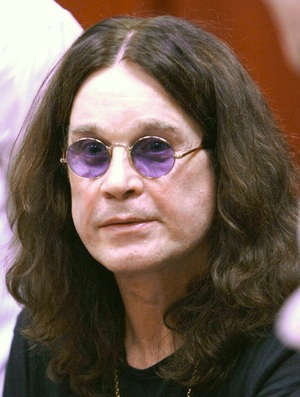
A year after his death, Birmingham and the world honor Ozzy Osbourne—the kid from Aston who defied doctors for one last bow and changed rock forever.
On a damp morning along Broad Street, the heavy metal bench overlooking the canal in Birmingham was barely visible beneath a fresh mountain of flowers, faded leather patch jackets, and half-empty cans of cider.
Ozzy Osbourne passed away on July 22nd last year, at the age of 76. The news sent shockwaves through the global music community, marking the loss of heavy metal's quintessential pioneer. Here in Birmingham—where four working-class lads from Aston first warped blues into the ominous, thunderous riffs that birthed a genre—the grief has settled into an indelible, roaring legacy.
Local factory mechanics and lifelong fans still gather near the canal, turning up their amplifiers to fill the silence left behind.
To understand the weight of Osbourne’s absence, one must look back to his final stage appearance.
In early July 2025, defiance took physical form on the stage of Villa Park. Suffering from advanced Parkinson’s disease and weakened by years of spinal surgeries, Osbourne had been advised by medical professionals that performing carried severe risks.
He went anyway.
The Back to the Beginning benefit concert saw Osbourne reunite with original Black Sabbath bandmates Tony Iommi, Geezer Butler, and Bill Ward for what was billed as a final farewell. Seated on a custom throne, his hands trembling until he gripped the microphone, the Prince of Darkness summoned one last tempest. Seventeen days later, he passed away quietly at his home in Buckinghamshire.
He chose to perform one last time as a final gift to himself, his bandmates, and the audience that sustained his career across six decades.
Osbourne’s story remains the ultimate working-class fairytale. Born in 1948 into post-war austerity, young John Osbourne worked in slaughterhouses and tuning factories before finding a lifeline in music. Alongside Iommi, Butler, and Ward, Black Sabbath released their self-titled debut in 1970. The opening tri-tone of its title track—bleak, ominous, and revolutionary—effectively drew the blueprint for heavy metal.
When he was fired from Sabbath in 1979 amidst crippling substance abuse, few would have predicted that his second act would eclipse his first. With his manager and future wife Sharon at his side, Osbourne launched a solo career that yielded immortal anthems like "Crazy Train" and "Mama, I'm Coming Home," alongside legendary guitar talents like Randy Rhoads and Zakk Wylde.
Then came the 2000s, when MTV’s The Osbournes reinvented him once more—this time as America’s favorite, bewildered suburban patriarch. He became a cultural bridge, connecting classic rock purists with a suburban generation that knew him as an endearing TV personality.
Over the past twelve months, the world has scrambled to fill the void. In October 2025, his posthumous memoir Last Rites hit bestseller lists, offering an unfiltered look at his final years. At the 2026 Grammy Awards, an all-star supergroup featuring Slash, Post Malone, and Chad Smith tore through "War Pigs," bringing the audience to its feet in a cathartic sing-along.
Yet for the family and those closest to him, the reality of his absence remains profound. His daughter Kelly Osbourne recently shared public reflections describing the deep personal shift of moving forward after such a loss.
Across Birmingham, civic leaders officially inaugurated "Ozzy Day," marked by a series of charity events and the unveiling of a permanent bronze memorial near the Black Sabbath Bridge.
As twilight settles over the West Midlands, fans gather outside the Crown pub—where Sabbath played their very first gig in 1968. A speaker sits in the doorway, blasting "Mr. Crowley" into the evening air. For a man who spent five decades flirting with darkness, Ozzy Osbourne left behind an astonishing amount of light.
He didn't just survive rock 'n' roll; he defined it, laughed at it, and gave it a heart. One year later, the world is still headbanging.
Sources
- BBC
- CNN
- Associated Press
- Blabbermouth.net
- Blunt Magazine
- Loudwire
- Consequence of Sound
- Ultimate Classic Rock
- PBS
 Jack, Diane, and the Summer of '82: How John Mellencamp Made Chart History
 How Toots Hibbert Gave Reggae Its Name and Soul
 On This Day: Nirvana’s ‘Smells Like Teen Spirit’ Rewrites Rock History
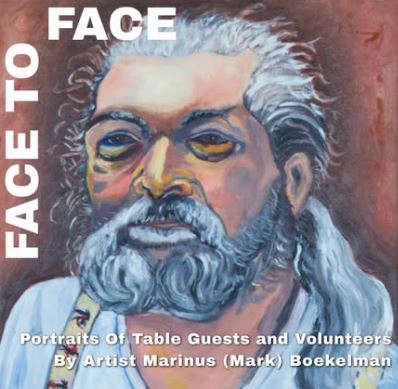 New Art Exhibition Puts a Human Face on Huntsville’s Food Insecurity
 Light 'Em Up: Zippo's Ultimate Lighter-in-the-Air Anthem






Comments
Add a comment