
In March 1977, a chaotic trio took the stage at a modest Birmingham basement club. Two years later, they were topping the global charts
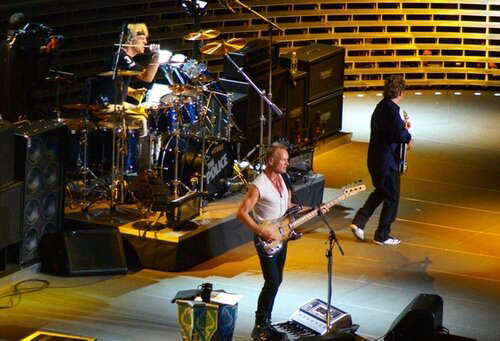
On a cold Thursday evening in March 1977, the basement air inside Rebecca’s Nightclub in Birmingham was thick with sweat, cheap beer, and tension. Up on the small, low stage, three young musicians plug into second-hand amplifiers and brace themselves for impact. The crowd—a mix of rowdy locals and hardcore punks expecting fast, aggressive three-chord noise—has no idea what is about to hit them.
The band calls itself The Police. At the center is Sting (Gordon Sumner), a former schoolteacher from Newcastle with a soaring voice and a bass guitar hanging low. Beside him, driving the relentless beat, is Stewart Copeland, the energetic American drummer who founded the group. On guitar for this early gig is Henry Padovani, whose raw, energetic chord chops fit the prevailing punk aesthetic of late-70s Britain.
That night at Rebecca’s marked the official live debut of a group born out of punk's chaotic energy, but destined for something far larger.
Yet the road from that dark Birmingham dance floor to global stardom was anything but straightforward. Shortly after their debut, the line-up underwent a crucial shift. Guitarist Andy Summers, a seasoned veteran of the London music scene with a deep background in blues and jazz, joined the band. His sophisticated chord work and creative use of delay effects transformed the trio’s sound overnight, squeezing out Padovani and solidifying the iconic line-up that would shake the world.
While their contemporaries in the late-1970s London punk scene were smashing guitars and sneering at musical technique, The Police were doing something entirely different. They possessed a secret weapon: genuine musical chops.
Summers and Sting brought a rich vocabulary of jazz harmonies, while Copeland’s syncopated, reggae-influenced hi-hat technique gave their rhythm section an unshakeable groove. Instead of playing fast and furious punk rock, they stripped the tempo down, injected space and air into the tracks, and blended the laid-back bounce of Jamaican reggae with the aggressive, driving edge of British punk.
By 1978, that signature fusion broke through the noise.
The band released "Roxanne," a dramatic, reggae-infused ballad written about a prostitute in Paris. Though initial airplay was scarce due to the song's controversial subject matter, its persistent rhythm and Sting’s iconic, soaring vocal hook eventually proved irresistible to radio programmers on both sides of the Atlantic.
What followed was a whirlwind two-year ascent. The band quickly followed up with "Can't Stand Losing You," a track that paired infectious, upbeat ska rhythms with dark, desperate lyrics. By late 1979, they dropped "Message in a Bottle," powered by Andy Summers' instantly recognizable, arpeggiated guitar riff and Copeland’s explosive drumming. It shot straight to Number 1 on the UK charts.
In just 24 months, the trio had evolved from an unheralded band playing to a few dozen people at Rebecca’s to one of the biggest rock acts on the planet. They didn't just survive the death of the UK punk explosion—they took its spirit, fused it with reggae and jazz, and redefined the sound of modern pop music forever.
Sources:
- Copeland, Stewart. "Strange Things Happen: Life with The Police, Polo, and Pygmies." HarperCollins, 2009.
- Summers, Andy. "One Train Later: A Memoir." Thomas Dunne Books, 2006.
- Sutcliffe, Phil. "The Police: Every Breath You Take." Voyageur Press, 2007.
- BBC Music Archives
- Classic Rock Magazine
Image: This file is licensed under the Creative Commons Attribution-Share Alike 3.0 Unported license. Author: Lionel Urman
 How Bob Dylan Rewrote the Nobel Prize for Literature
 New Music Monday: New Hard-Hitting Rock and Roots Voices Power The Countdown
 The B-Side That Stole The Show
 90s Canadian Rock Icons I Mother Earth Set to Shake the Algonquin Theatre
 Dance, Dance, Dance to the Radio: How Joy Division’s “Transmission” Sparked a Legacy











Comments
Add a comment